
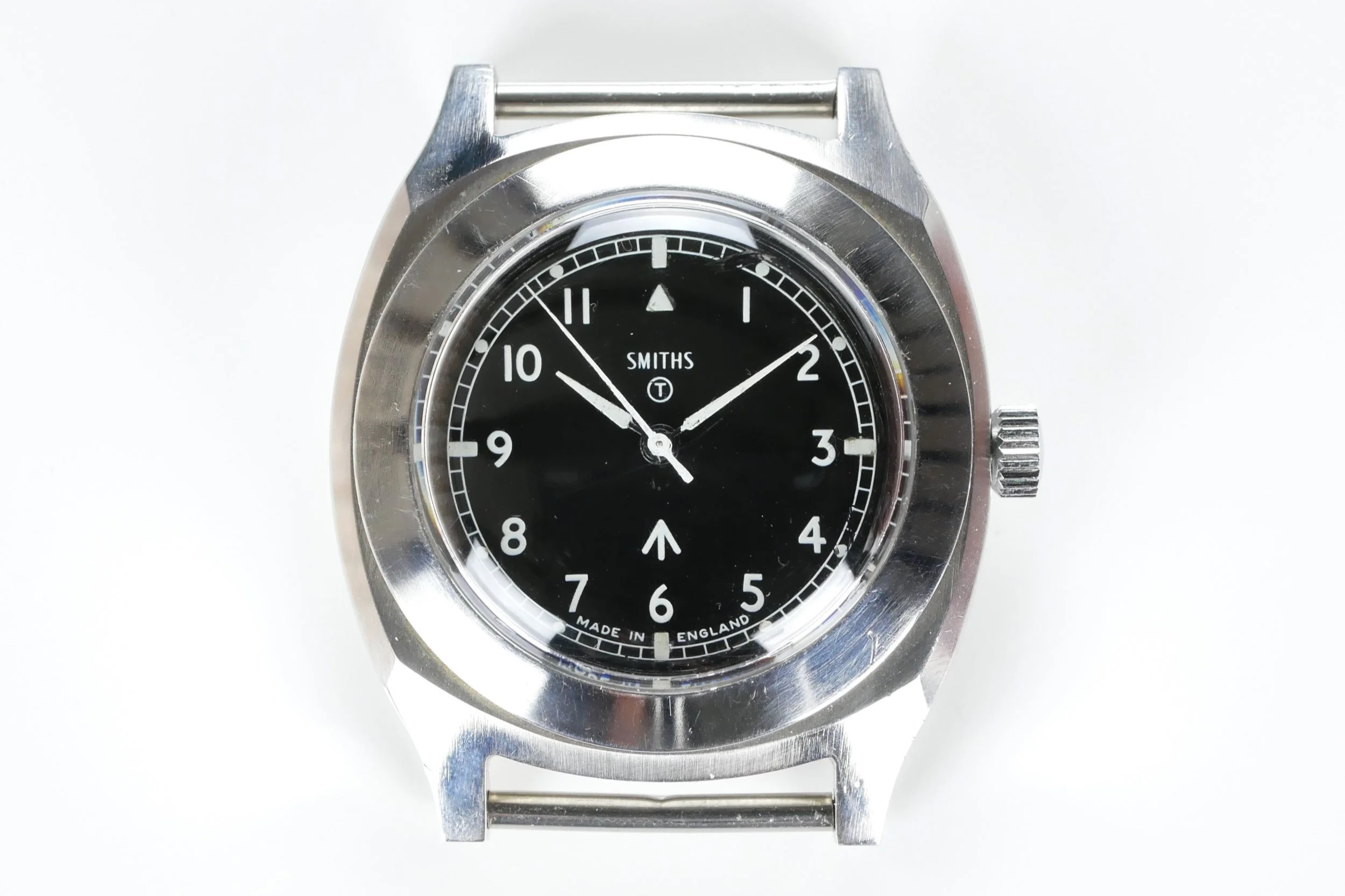
Smiths W10/0308 Prototype
New research into a Smiths prototype suggests Britain came close to building a homegrown answer to the iconic Rolex MilSub and Omega Seamaster 300. The watch never actually reached the wrists of clearance divers and special forces. Not to worry, really, since today, British watchmaking is seeing a second golden era. But what would an inhouse British military dive watch have looked like if it had succeeded?
The Watch - W10/6645/0308/61
The unassuming Smiths prototype rewrites a small chapter of British military watchmaking history. Marked “W10/6645/0308/61”, it sold at auction last year for a little over £10,000 and has since undergone a serious technical and historical investigation by a group of specialists. Their conclusion is an exciting one for anyone who cares about this country’s watchmaking past: Smiths may have secretly attempted to build Britain’s own military dive watch, years before CWC and Precista got the call from the MoD.
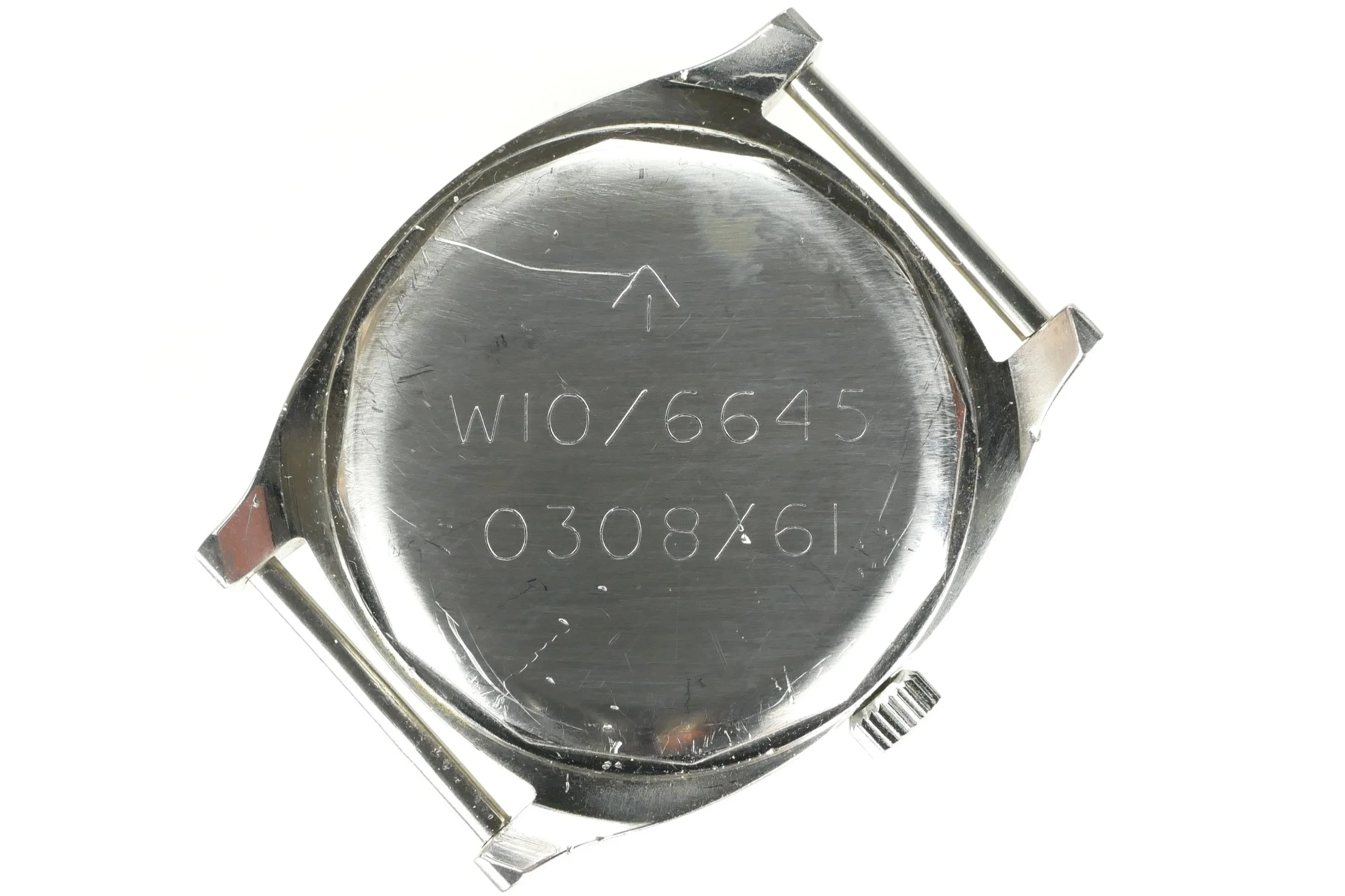
The caseback markings, suggesting Army issuance and a 1961 production year
Beneath a substantial 42mm cushion case, built with all the hallmarks of a contemporary professional dive watch, sits a jet-black dial printed thicker and glossier than those of the general service Smiths W10. Odder still, there's no luminous material on it at all, despite a circled “T” that would normally denote tritium. The dial is stuck to the movement with adhesive rather than conventional feet; an unmistakable signature of a hand-built one-off rather than a production run. Inside ticks an early 17-jewel calibre 60464E, dated March 1964: a direct ancestor of the 60466E that would go on to power the Smiths W10 supplied to the British Army later that decade.
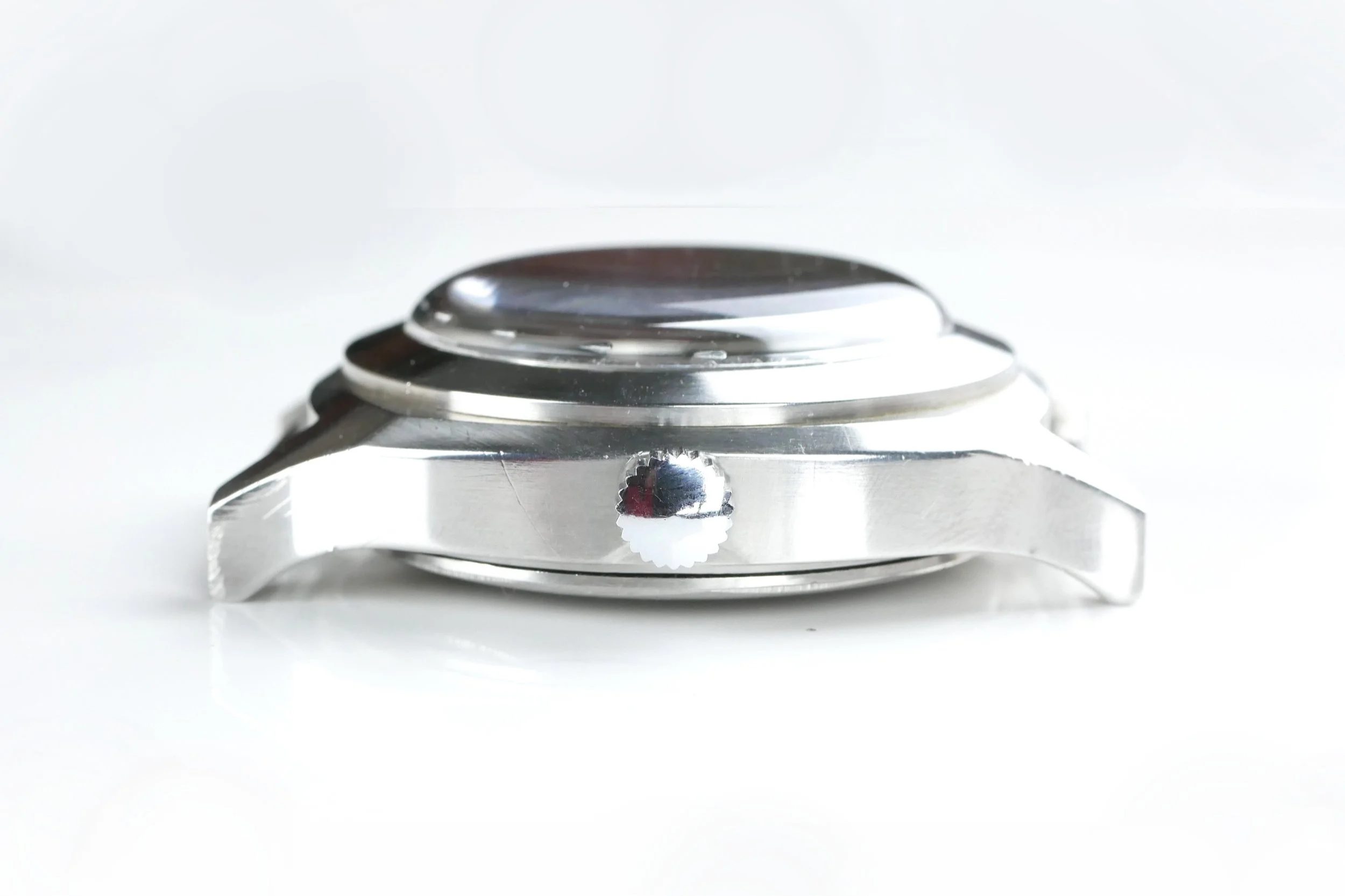
Chunky case, domed crystal
The prototype watch first surfaced back in 2009, mentioned in Konrad Knirim’s seminal and highly recommended book on British military timepieces simply as a “rare test item,” before vanishing into a private collection for over a decade. It resurfaced only when its owner consigned it to auction last year.
Smiths historian Barry M Jones, who wrote it up in his own 2013 history of the company, corroborates this; horologist Simon Freese, who has examined the piece in person, agrees it carries every hallmark of an experimental prototype rather than a later marriage of parts.
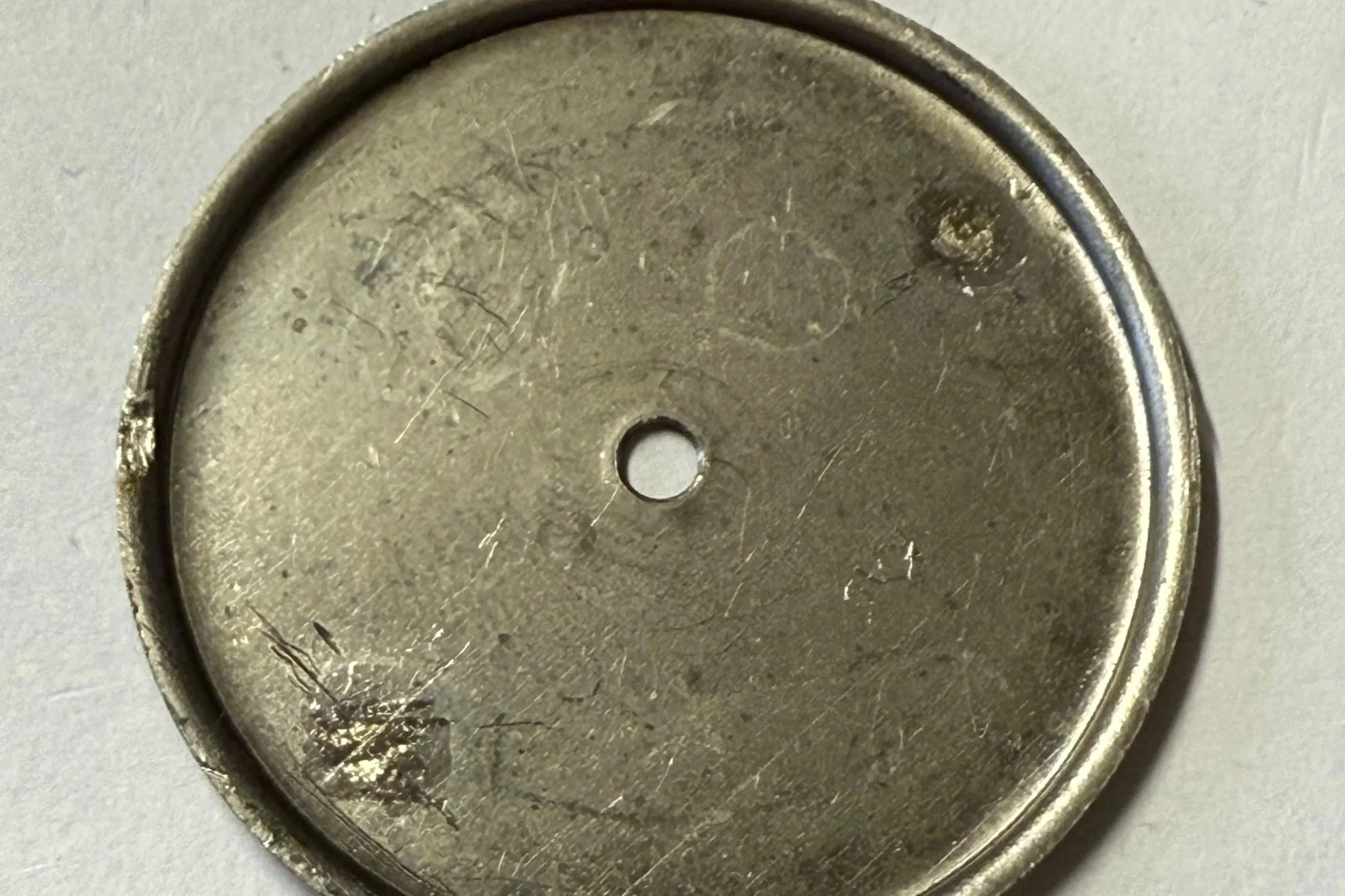
The lack of dial feet are a hallmark of a prototype - not too dissimilar from CWC’s mythical 1982 divers
Made-in-Britain VS Swiss-Made
None of this should come as much of a surprise, given Smiths’ pedigree. What began as Samuel Smith’s London watch and clock shop in 1851 grew, via a Royal Warrant in 1907 and a booming sideline in car instruments, into one of Britain’s largest engineering groups.
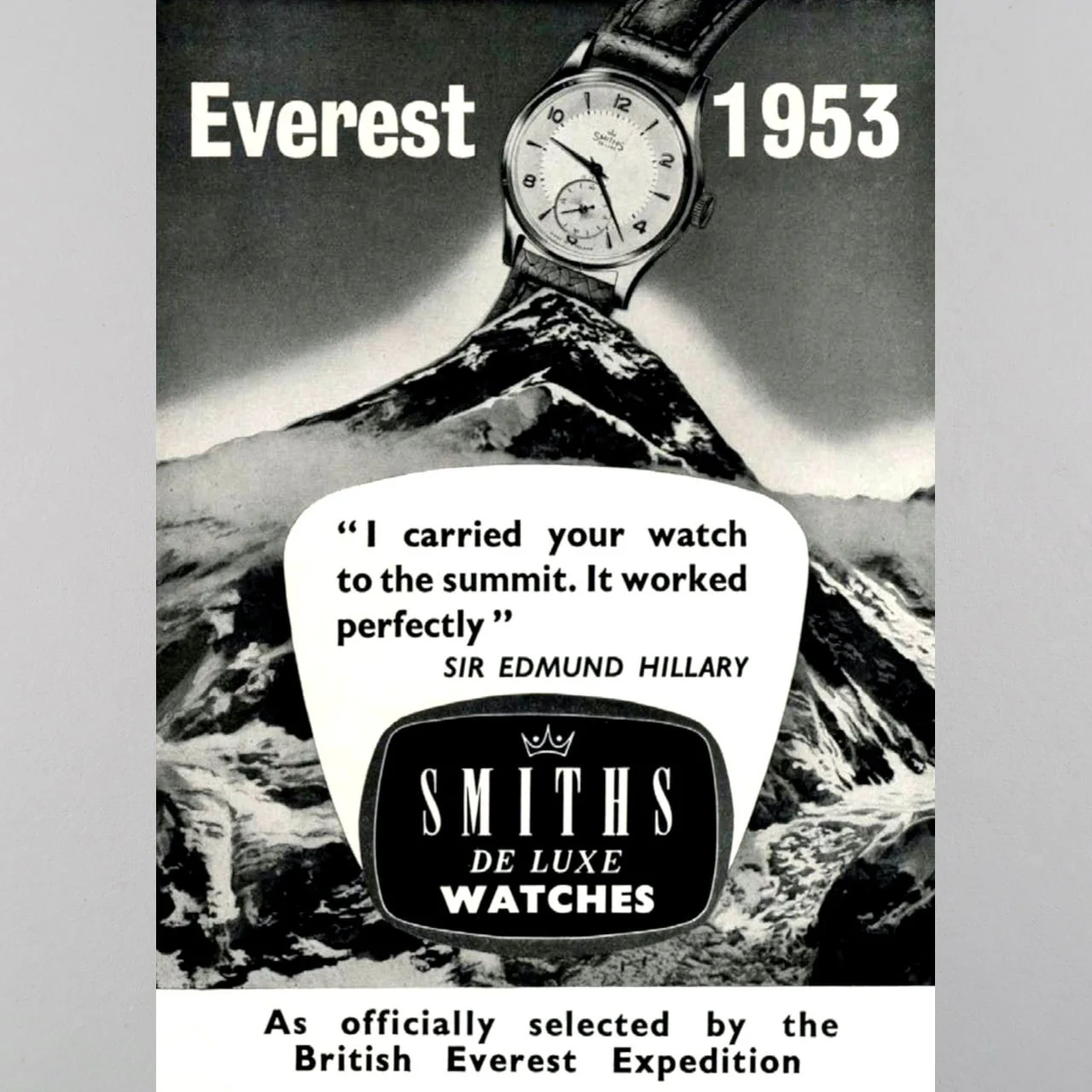
When war loomed in the late 1930s and the government wanted domestic escapement manufacture, Smiths built a dedicated watchmaking factory at Cheltenham, followed by a second at Ystradgynlais in Wales which at its peak employed some 1,500 people and shipped over 30 million watches and clocks to 60 countries.
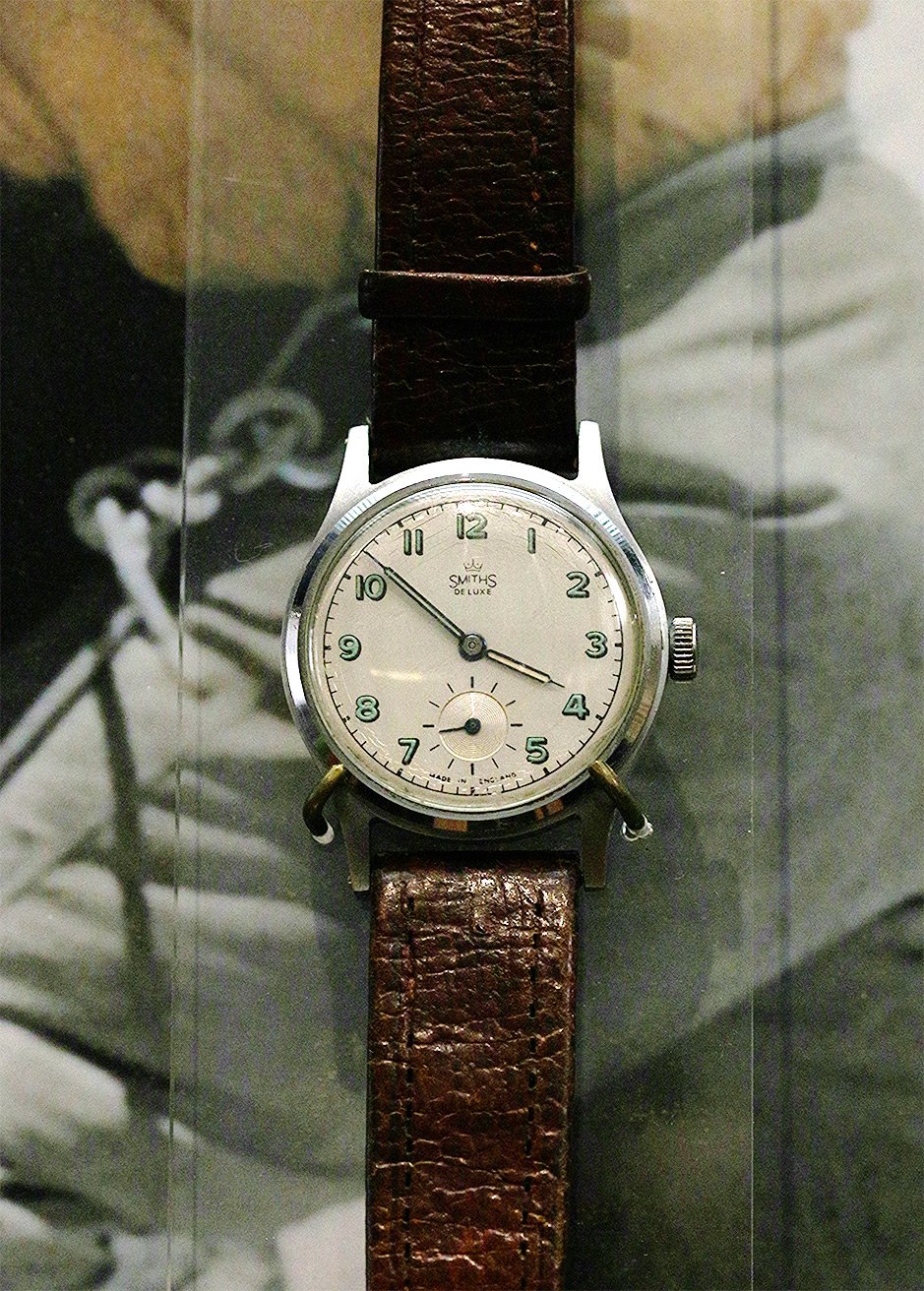
Sir Edmund Hillary’s “Everest” Smiths De Luxe
Smiths already had an extreme-environment tool watch pedigree before their attempt at a military-spec diver. Sir Edmund Hillary wore a Smiths De Luxe, treated with a cold-resistant lubricant, on the first ascent of Everest in 1953, later reporting that it had performed well. That watch is now on display as part of the Clockmakers’ Museum collection within London’s Science Museum.
And of course, the other Everest-tested watch of the event was Rolex’s Oyster Perpetual, which would spin off into the iconic Explorer model. And any watchmaker who could survive Everest was more than capable of having a crack at the Admiralty…
Royal Navy clearance divers were issued Rolex Explorers marked “HS.10.CD” — Hydrographic Survey pattern ten, Clearance Diver — as early as 1953, and by 1957 the Special Boat Service had a purpose-modified Submariner, the A/6538. In 1967 the Admiralty switched to Omega, issuing a bespoke Seamaster 300 with fixed welded lugs, sword hands and the famous “Big Triangle” dial, only for its Naiad (non-screw-down) crown to struggle at depth and require the MoD to modify it (denoted by an “A/” before the issue markings).
The MoD had returned to Rolex by 1971 in the form of the 5513/5517 “MilSub”, roughly 1,200 of which went to Royal Navy and Army divers.
By 1980, with Rolex prices climbing out of budget, procurement shifted to the Cabot Watch Company, who enlisted the legendary French brand Dodane to manufacture British military-spec divers with MRP ‘Monnin’ cases. Precista produced their own automatic Royal Navy diver in 1982.
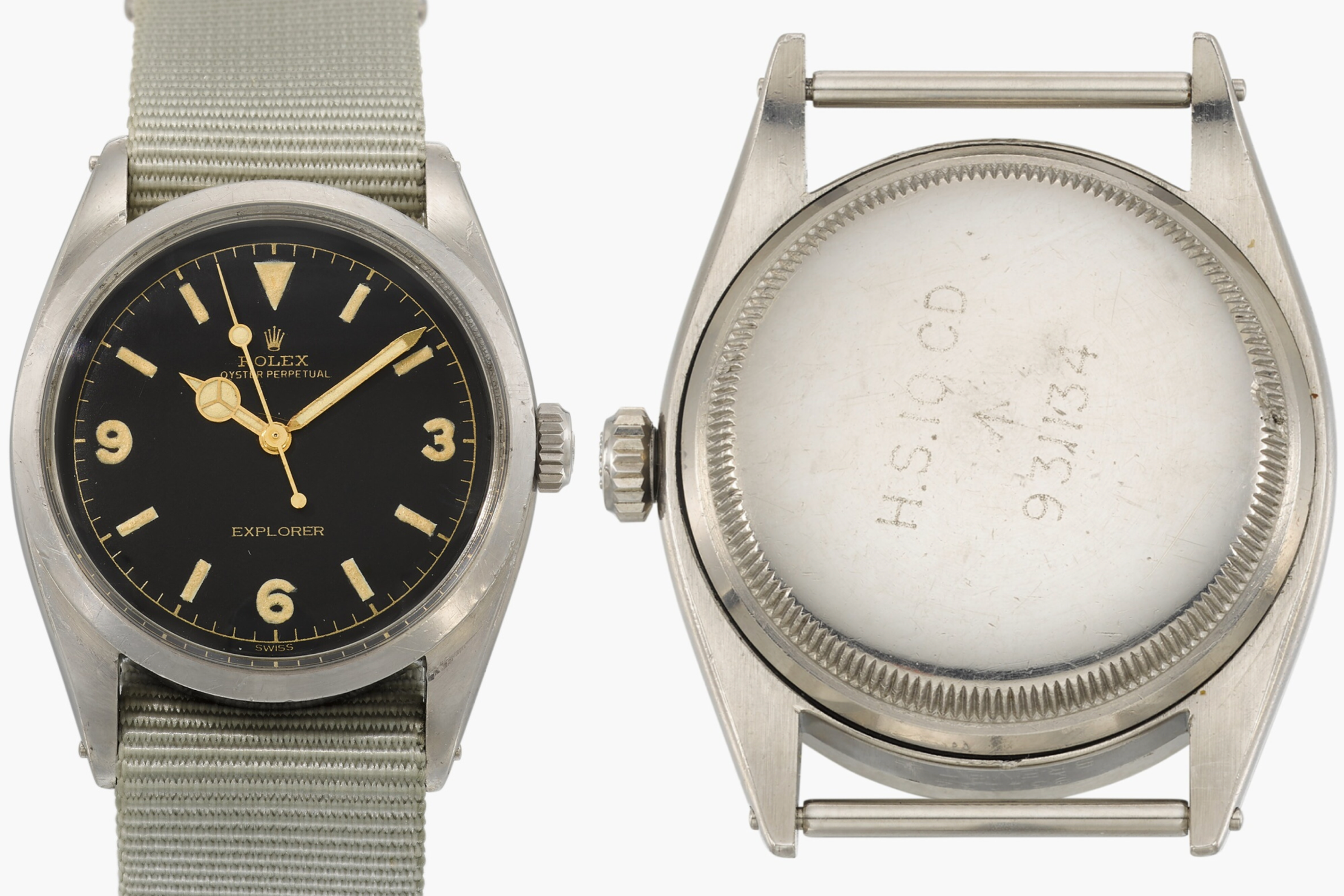
Rolex “pre-Explorer” reference 6150 - Britain’s first clearance divers’ watch
British Royal Navy Diving
Military diving predates Britain's navy by millennia. The earliest case on record is the diver Scyllias and his daughter Cyana, who in 480 B.C. cut loose the moorings of Xerxes’ storm-sheltered Persian fleet off Mount Pelion, sending ships crashing together. Legend also credits Alexander the Great with using an early diving bell during the 332 B.C. siege of Tyre, sending men below to clear the underwater obstacles Tyrian defenders had sunk against his siege causeway.
Britain’s chapter starts with Charles William Pasley. From 1838, the Royal Engineer colonel put Augustus Siebe’s newly improved closed diving dress to work salvaging the wreck of HMS Royal George at Spithead, a years-long operation that effectively wrote the rulebook for modern military diving. A fun echo: when CWC’s SBS divers transferred to the Royal Engineers in 2005, their watches were marked “W10” rather than 0555, the same prefix on the Smiths prototype, possibly suggesting it was being prototyped for Royal Engineers. By 1843–1844 the Royal Navy had formed their diving school at HMS Excellent on Whale Island, built around Siebe’s closed dress.
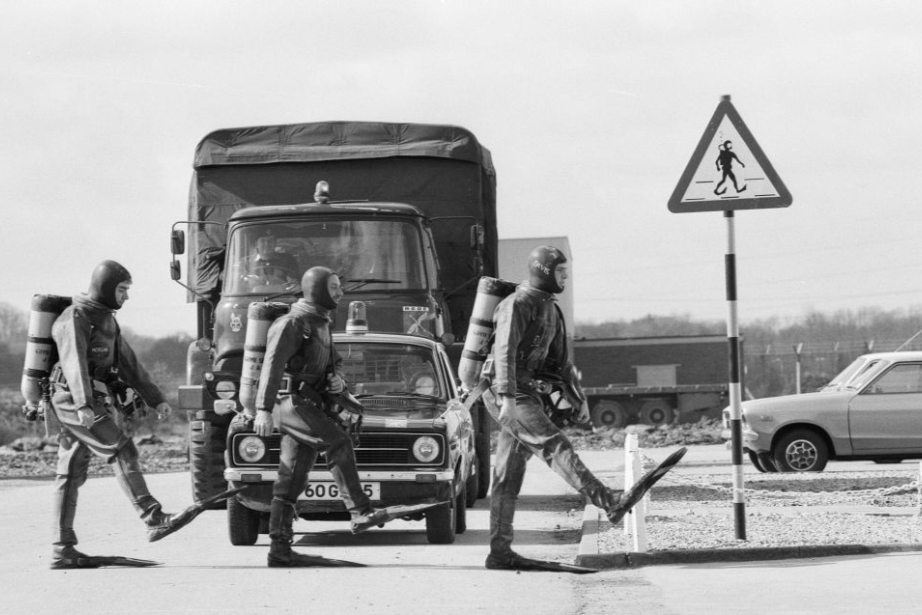
Why did the British Army Royal Engineer diver cross the road?
The Admiralty Experimental Diving Unit – formed in the early 1940s at the Siebe Gorman diving equipment works in Tolworth, and by the 1960s operating out of HMS Vernon in Portsmouth – had spent the war developing gear for human torpedoes, X-craft and clearance divers, then turned to standardising what divers wore on their wrists. Its declassified reports, held at the National Archives, show a file opened in May 1964, barely two months after W10/0308 left the bench, with the explicit aim of rationalising and specifying “watches for use by divers”.
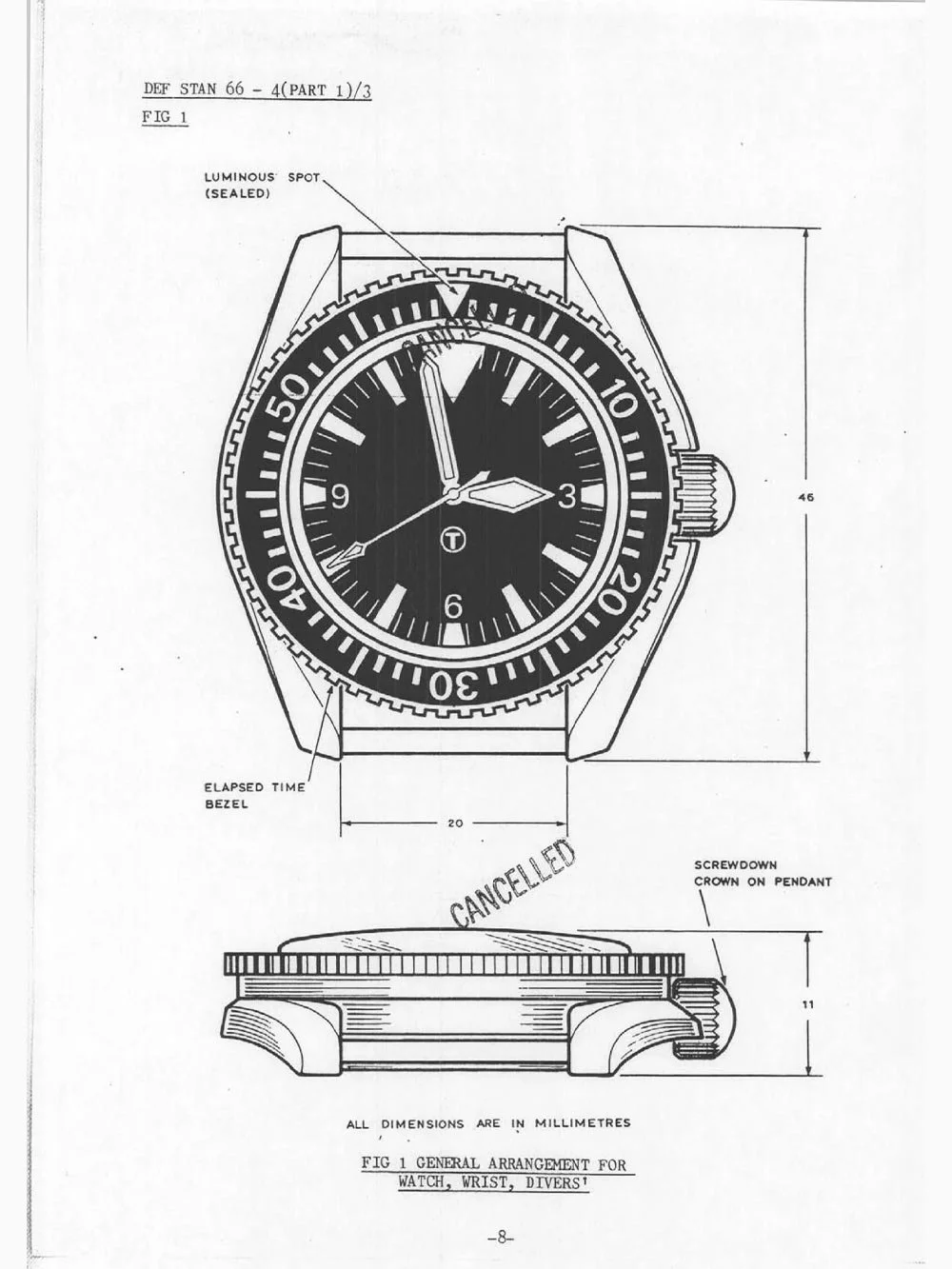
DEF STAN 66-4 Part 1 Issue 3 - an “acceptable dive watch” as of 1971
Omega Seamasters were already under evaluation for the role by that point. That process may even have shaped the later Seamaster 300’s crown-guard case, and it fed into a dial design, eventually written into the now famous Defence Standard 66-4(1) of 1968.
Nothing in that paperwork names W10/0308 directly, and it’s entirely possible Smiths’ prototype never got anywhere near Portsmouth. But the coincidence is hard to ignore: at the exact moment Britain’s divers were being treated as a design problem worth solving properly, one of the country’s biggest watchmakers appears to have built a prototype dive watch of its own.
Smiths’ own side of the story is even thinner. Much of its paper trail vanished when the watchmaking arm finally closed in 1971, and Christopher Herbert of Finest Hour is candid that no single document confirms what W10/0308 was destined to become. But between the provenance, construction and historical context, he argues the watch came “remarkably close” to being Britain’s homegrown answer to the Submariner and Seamaster 300; a domestic military diver that never quite got the green light.
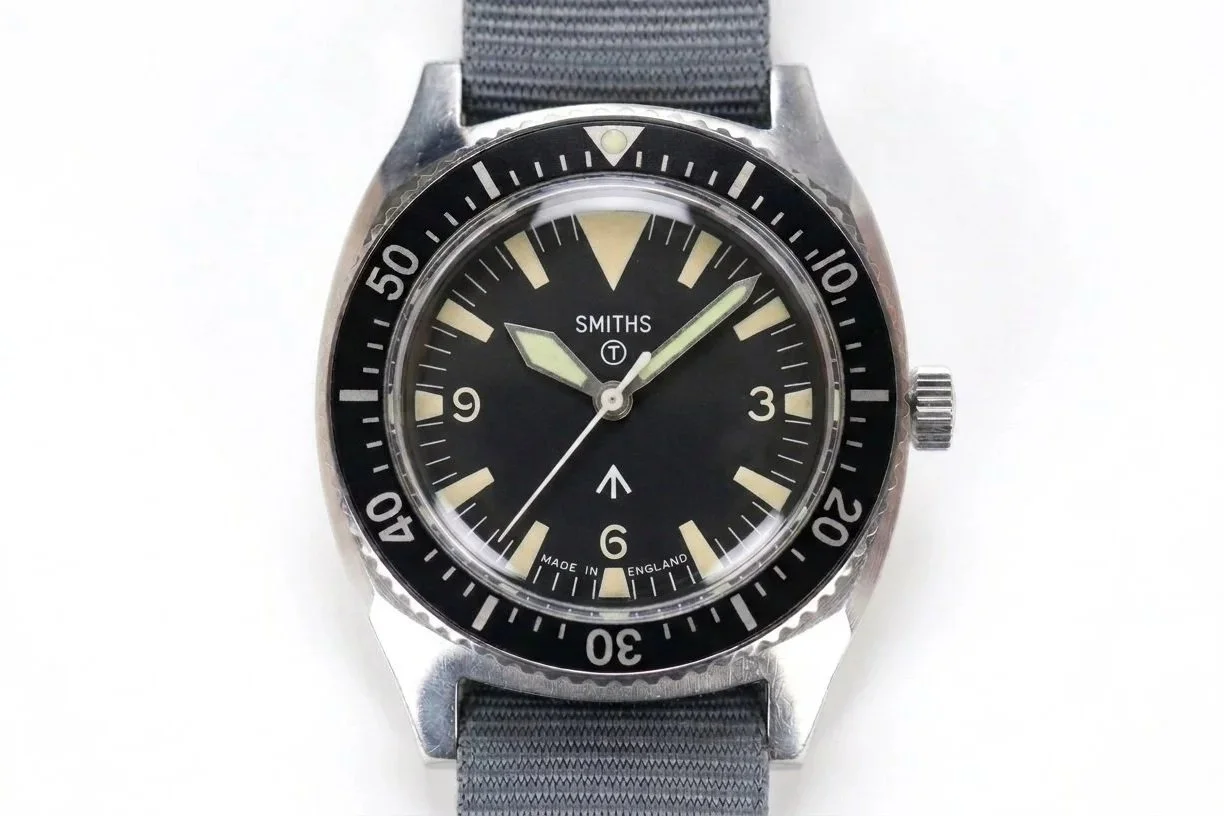
What the Smiths Prototype Diver would have looked like with a full-spec bezel, dial and hands
For further reading, please see Christopher Herbert’s original article here.